Accelerating towards net zero across all markets by 2050
Managing of

Decarbonisation goals
Our Climate Transition Plan outlines six strategies to decarbonise our most carbon intensive Scope 1 and 2 activities, including stationary combustion, electricity, mobile combustion and refrigerants.
By leveraging innovative solutions and optimising energy use, we aim to accelerate meaningful reductions, ensuring alignment with both corporate and global climate goals. This steadfast focus underscores our role as a leader in driving impactful change across the industries and communities we serve.

Energy Efficiency
Energy efficiency involves upgrading equipment, optimising operations, and using AI to improve network and office performance.

Renewable energy procurement
Renewable energy purchasing focuses on corporate power purchase agreements (PPAs) and international renewable energy certificates (I-RECs) to source cleaner electricity.

Refrigerant gases
Free cooling and gas replacement targets emissions from refrigerants and fire suppressants by adopting low global warming potential alternatives.

Renewable generation
On-site renewable generation, such as solar PV, provides a partial energy supply, with battery storage and diesel hybrid solutions for off-grid sites.

Fleet electrification
Fleet electrification replaces our current combustion vehicles with electric alternative, through challenges remain in the supply of cleaner shipping fuel in e-marine, however, alternative are being developed.

Carbon offset
Carbon offsetting will address any difficult to abate emissions. This will be achieved through credible offset projects that align with SBTi requirements.

Our Climate Transition Plan
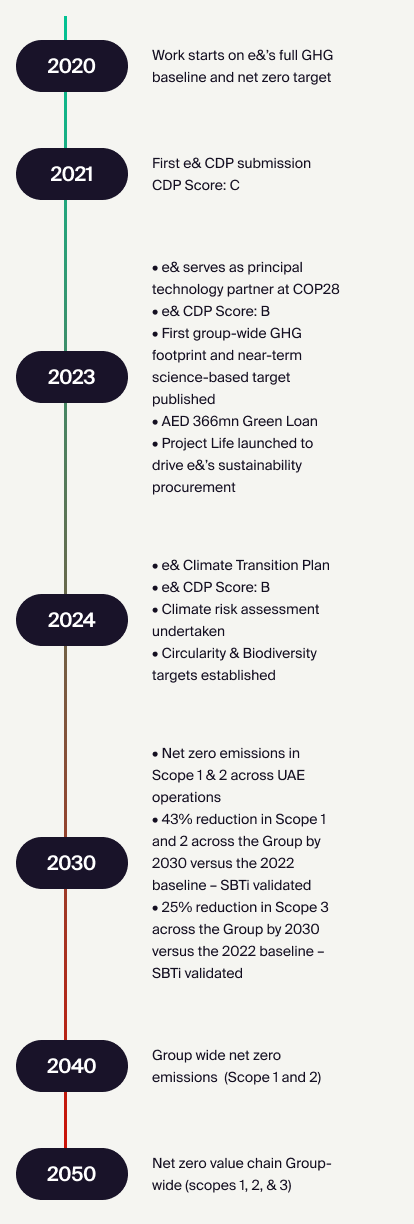
At COP28, etisalat committed to achieving net-zero emissions across its operations by 2050. In 2024, we launched our Climate Transition Plan: From Ambition to Action, outlining the practical steps needed to meet this goal. The plan focuses on decarbonising operations, investing in clean energy, improving efficiency, and building climate resilience. Aligned with global standards and science-based targets, it reflects our commitment to innovation, transparency, and long-term impact as we work to create a more sustainable future.


© etisalat. All Rights Reserved.